Suggested Native Replacements:
- American hornbeam, Ironwood (Carpinus caroliniana)
- American wild plum (Prunus americana)
- Black gum, Sour gum (Nyssa sylvatica)
- Black haw, Blackhaw (Viburnum prunifolium)
- Canadian serviceberry (Amelanchier canadensis)
- Common pawpaw, Paw paw (Asimina triloba)
- Common persimmon, American persimmon (Diospyros virginiana)
- Downy serviceberry, Shadbush (Amelanchier arborea)
- Eastern redbud (Cercis canadensis var. canadensis)
- Flowering dogwood (Cornus florida)
- Fringetree, Old man's beard (Chionanthus virginicus)
- Hop-tree, Hop tree (Ptelea trifoliata var. trifoliata)
- Ironwood, Eastern hop-hornbeam (Ostrya virginiana)
- Sassafras, Cinnamon wood (Sassafras albidum)
- Smooth serviceberry, Allegheny serviceberry (Amelanchier laevis)
- Southern crabapple (Malus coronaria)
- Swamp magnolia, Sweetbay (Magnolia virginiana)
- Washington hawthorn (Crataegus phaenopyrum)
Common Name
Callery pear
Bradford pear
Plant Form
Medium Trees
Region
Coastal
Piedmont
Mountain
Considered Invasive by the State of Virginia?
Yes
Threat Level
Medium
Additional Info
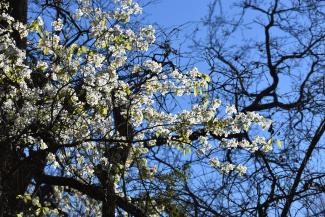
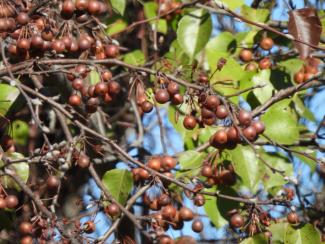
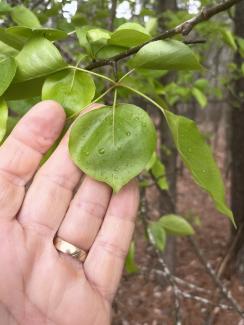
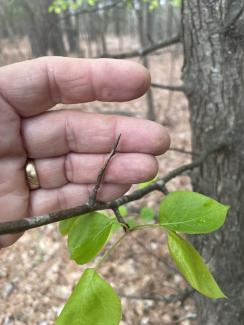
Notes: Originally brought to the United States to combat disease affecting the common pear, this non-native tree, including the popular ‘Bradford’ cultivar, is now planted in high density in a variety of urban and suburban settings. It can spread aggressively outside cultivation. The National Park and U.S. Fish and Wildlife Services consider it a plant invader of Mid-Atlantic natural areas.
Method of removal: Hack and squirt
Attention! Resprouts
Additional links
Native Look-alikes
iNaturalist Research-grade Observations