- Mimosa, Persian silk tree (Albizia julibrissin)
- White mulberry (Morus alba)
- Sweet cherry (Prunus avium)
- Higan cherry (Prunus subhirtella)
- Callery pear, Bradford pear (Pyrus calleryana)

Commercially Available
My Native Garden
Put together a printable/downloadable list of plants that you have in your garden.
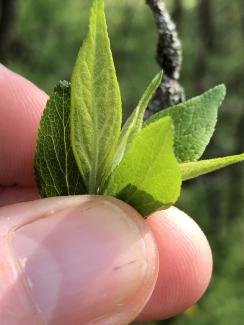
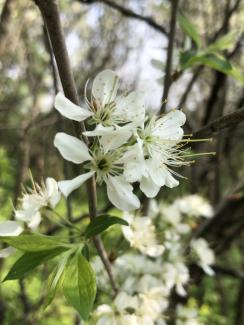
Rocky or sandy soils along streams, woodlands, pastures, fencerows. Disturbed forests, old fields, shrubby clearings, and fencerows. Infrequent but widespread throughout
Its thickets provide good cover for songbirds and small mammals year-round. This plant provides nectar for pollinators and is a larval host plant for several species of butterflies. The fruits are eaten by songbirds, wild turkeys, quail, white-tailed deer, and small mammals. Deer also eat the twigs and leaves
As a tree, it typically grows to 10-20' tall with a broad, spreading crown. As a shrub, it suckers freely and can form large colonies. Remove suckers to prevent unwanted spread or to train into a small tree. It can form thickets with its thorn-like side branches so keep it will have to be maintained unless that is the desired result.
Symptoms include Gasping, weakness, excitement, pupil dilation, spasms, convulsions, coma, respiratory failure.