Non-native plants this species can replace:
- Mimosa, Persian silk tree (Albizia julibrissin)
- Callery pear, Bradford pear (Pyrus calleryana)
- Chinese elm (Ulmus parvifolia)
- Siberian elm (Ulmus pumila)
Common Name
American hornbeam
Ironwood
Plant Form
Medium Trees
Shrubs & Small Trees
Duration
Perennial
Max Height (ft)
30.0
Width (ft)
20.0 -
35.0
Region
Coastal
Piedmont
Mountain

Hardiness Zone
5,
6,
7,
8,
9
Commercially Available
Nurseries that may carry live plant:
My Native Garden
Put together a printable/downloadable list of plants that you have in your garden.
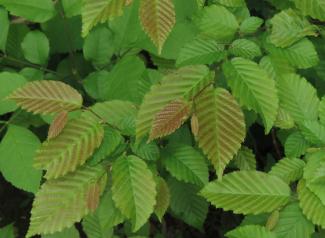
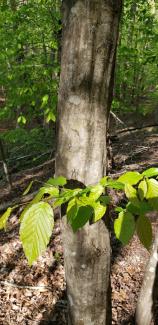
Habitat
Mesic upland forests, floodplain forests, alluvial swamps, tidal swamps, wet flatwoods, and stream banks. Common in the Virginia Coastal Plain and Piedmont; frequent in the mountains (at lower elevations)
Wildlife value
It is a larval host plant for the Eastern Tiger Swallowtail (Papilo glaucus) and the Red-spotted Purple (Limenitis arthemis astyanax). The seed and buds provide food source for songbirds, ruffed grouse, quail, wild turkeys, foxes, and squirrels. On young specimens, the inner bark is eaten by beavers and rabbits. These plants also provide good cover and shelter for animals
High Value Generalist
Earth Sangha lists this plant as a "High Value Generalist" because it is easy to grow, occurs across a wide range of habitats and is known to be of high value to wildlife
Flower Color
Gold/Yellow
Green
Flower Prominence
Reduced
Bloom Time
Spring
Fall Color
Burgandy/Red
Orange
Light Requirements
Partial sun
Shade
Moisture Requirements
Moist
Average
Soil Texture
Clay
High organic matter
Loamy
Sandy
Seed or Fruit eaten by wildlife?
Yes
Pollinators
Butterfiles
Top 30 for Butterfly and Moth Caterpillars?
Yes
Number of Lepidotera Species Genus Supports
200
Additional links