- Japanese maple (Acer palmatum)
- Mimosa, Persian silk tree (Albizia julibrissin)
- Golden raintree (Koelreuteria paniculata)
- Siberian crabapple (Malus baccata)
- Japanese crabapple (Malus floribunda)
- Chinese crabapple (Malus hupehensis)
- Callery pear, Bradford pear (Pyrus calleryana)
- Chinese elm (Ulmus parvifolia)
- Siberian elm (Ulmus pumila)

Commercially Available
My Native Garden
Put together a printable/downloadable list of plants that you have in your garden.
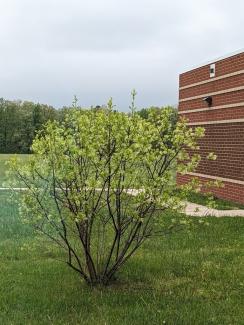
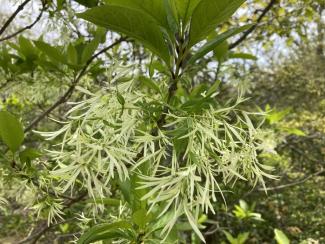
In a wide range of mesic to dry upland forests, woodlands, and barrens; often numerous on mafic outcrops, although generally not at all particular about rock or soil chemistry; less characteristic of but also widespread in small-stream alluvial forests and swamps, seepage swamps, tidal swamps, depression swamps, wet flatwoods, and other wetlands. Frequent to common throughout Virginia
Fringe tree is a host plant to moths of the sphinx moth family. Cuckoo and other native bees are essential pollinators. Berries are attractive to birds such as cardinals, bluebirds, thrashers, mockingbirds, woodpeckers, and wild turkeys. Twigs and foliage are browsed by many animals, including deer