- Norway maple (Acer platanoides)
- Tree-of-heaven, Chinese sumac (Ailanthus altissima)
- Mimosa, Persian silk tree (Albizia julibrissin)
- White mulberry (Morus alba)
- Callery pear, Bradford pear (Pyrus calleryana)

Commercially Available
My Native Garden
Put together a printable/downloadable list of plants that you have in your garden.
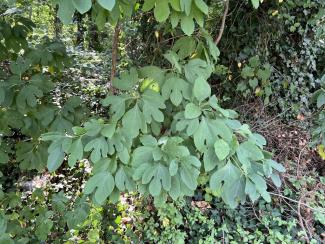
Dry to mesic forests and woodlands, old fields, fencerows, and other disturbed sites. Common throughout Virginia
Fruits are eaten by eastern bluebirds, red-eyed vireos, quail, wild turkeys, kingbirds, crested flycatchers, mockingbirds, sapsuckers, pileated woodpeckers, yellowthroat warblers and phoebes, black bears, beaver, rabbits, squirrels, some eat bark and wood, white-tailed deer browse twigs and foliage. This plant supports Imperial Moth (Eacles imperialis) and Spicebush Swallowtail (Papilio troilus). Adult Spicebush Swallowtail butterflies feed on nectar from Japanese honeysuckle, jewelweed, thistles, milkweed, azalea, dogbane, lantana, mimosa, and sweet pepperbush. Dead stems are used by stem-nesting bees
Messy
Shown to be a weak carcinogen in experimental animals.