Non-native plants this species can replace:
- Mimosa, Persian silk tree (Albizia julibrissin)
- Butterfly bush, Summer lilac (Buddleia davidii)
- Autumn olive (Elaeagnus umbellata)
- Winged euonymus, Burning bush (Euonymus alatus)
- Japanese privet, Wax-leaf privet (Ligustrum japonicum)
- Chinese privet (Ligustrum sinense)
- Callery pear, Bradford pear (Pyrus calleryana)
- Linden arrow-wood, Linden viburnum (Viburnum dilatatum)
- Viburnum lantana
- Crampbark (Viburnum opulus)
- Viburum sieboldii
Common Name
Black haw
Blackhaw
Blackhaw viburnum
Nannyberry
Plum leaf viburnum
Plant Form
Shrubs & Small Trees
Duration
Perennial
Max Height (ft)
15.0
Width (ft)
6.0 -
15.0
Growth Rate
Slow
Region
Coastal
Piedmont
Mountain

Hardiness Zone
5,
6,
7,
8,
9
Commercially Available
Nurseries that may carry live plant:
Nurseries that may carry seeds:
My Native Garden
Put together a printable/downloadable list of plants that you have in your garden.
Habitat
Successional woods, thickets, old fields, and roadside
Wildlife value
It is a host plant for Spring/Summer Azure butterflies. Its fruits are eaten by songbirds, squirrels and chipmunks. Its twig form provides shelter to wildlife
Gardening tips
It will grow in deep shade but will rarely bloom. It is adaptable to soil types and pHs. This is a great shrub for naturalized areas and can be pruned to a tree form.
High Value Generalist
Earth Sangha lists this plant as a "High Value Generalist" because it is easy to grow, occurs across a wide range of habitats and is known to be of high value to wildlife
Flower Color
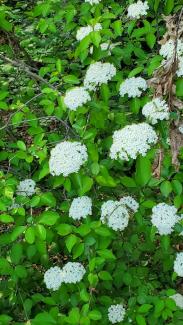
Cream/White
Pink
Flower Prominence
Conspicuous
Bloom Time
Spring
Bloom Month
March
April
Fall Color
Burgandy/Red
Purple/lavender
Light Requirements
Full sun
Partial sun
Moisture Requirements
Moist
Soil Texture
Clay
Loamy
Sandy
Shallow rocky
Low Maintenance
Yes
Good Choice for Public Spaces
Yes
Seed or Fruit eaten by wildlife?
Yes
Pollinators
Bees
Butterfiles