Non-native plants this species can replace:
- Italian arum (Arum italicum)
Common Name
Mayapple
Devil's apple
Duck's foot
Hog apple
Indian apple
Indian apple root
Mandrake
Raccoonberry
Umbrella leaf
Wild lemon
May-apple
May apple
Plant Form
Herbs
Duration
Perennial
Max Height (ft)
2.0
Region
Coastal
Piedmont
Mountain

Hardiness Zone
5,
6,
7,
8
Rabbit resistant
Yes
Commercially Available
Nurseries that may carry live plant:
My Native Garden
Put together a printable/downloadable list of plants that you have in your garden.
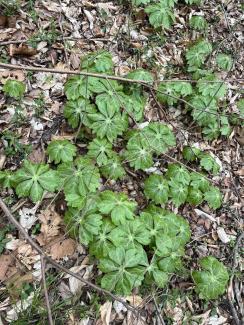
Habitat
Mesic to dry-mesic upland forests, well-drained floodplain forests, and various moist, disturbed habitats. Common throughout Virginia
Wildlife value
The flowers provide food for various species of bees. The fruits are eaten by wildlife including squirrels and box turtles
Poisonous to Humans:
Poison Severity:
High
Poison Symptoms:
The unripe fruit, roots, stems, seeds, and leaves cause salivation, vomiting, diarrhea, excitement, headache, fever, lethargy, panting, and coma (rare). Contact with leaves or roots causes severe redness, irritation, and skin ulcers, especially to the eyes.
Causes Contact Dermatitis:
Yes
Poison Part:
Leaves, Roots, Seeds, Stems
Also a Problem For:
Dogs and Horses
Flower Color
Cream/White
Flower Prominence
Conspicuous
Bloom Time
Spring
Early Summer
Bloom Month
April
May
Ground Cover
Yes
Light Requirements
Partial sun
Shade
Moisture Requirements
Moist
Average
Dry
Soil Texture
High organic matter
Loamy
Sandy
Low Maintenance
Yes
Deer Resitant
Yes
Seed or Fruit eaten by wildlife?
Yes
Pollinators
Bees