Non-native plants this species can replace:
- Winter creeper, Wintercreeper (Euonymus fortunei)
- Nandina, Heavenly bamboo (Nandina domestica)
- Linden arrow-wood, Linden viburnum (Viburnum dilatatum)
- Viburnum lantana
- Crampbark (Viburnum opulus)
- Viburum sieboldii
Common Name
Strawberry-bush
American strawberry-bush
Heart's-a-bustin'
Plant Form
Shrubs & Small Trees
Duration
Perennial
Max Height (ft)
6.0
Width (ft)
4.0 -
6.0
Growth Rate
Medium
Region
Coastal
Piedmont
Mountain

Hardiness Zone
6,
7,
8,
9
Commercially Available
Nurseries that may carry live plant:
Nurseries that may carry seeds:
My Native Garden
Put together a printable/downloadable list of plants that you have in your garden.
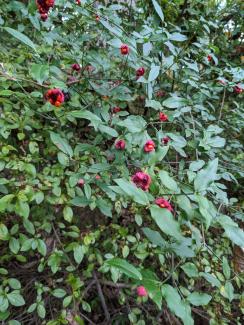
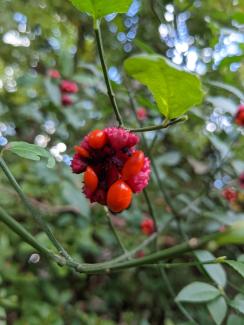
Habitat
Mesic to dry upland forests, well-drained floodplains, swamp hummocks, wet flatwoods, and sandhill woodlands. Common in the Virginia Coastal Plain and Piedmont; infrequent in mountains
Wildlife value
Frequently sustains damage from deer that eat the foliage and twigs. If planted in protected areas or if given protection like caging, these shrubs grow quickly and densely. Seeds are eaten by songbirds, wild turkeys and small mammals
High Value Generalist
Earth Sangha lists this plant as a "High Value Generalist" because it is easy to grow, occurs across a wide range of habitats and is known to be of high value to wildlife
Poisonous to Humans:
Poison Severity:
Low
Poison Symptoms:
Vomiting, diarrhea, weakness, chills, coma, and convulsions, IF EATEN IN LARGE QUANTITIES
Causes Contact Dermatitis:
No
Poison Part:
Flowers, Fruits, Leaves, Sap Juice, Stems
Flower Color
Gold/Yellow
Green
Purple/lavender
Flower Prominence
Reduced
Bloom Time
Spring
Early Summer
Fall Color
Burgandy/Red
Light Requirements
Full sun
Partial sun
Shade
Moisture Requirements
Moist
Average
Soil Texture
Clay
High organic matter
Loamy
Low Maintenance
Yes
Seed or Fruit eaten by wildlife?
Yes
Additional links