- Japanese privet, Wax-leaf privet (Ligustrum japonicum)
- Yellowgroove bamboo (Phyllostachys aureosulcata)

My Native Garden
Put together a printable/downloadable list of plants that you have in your garden.
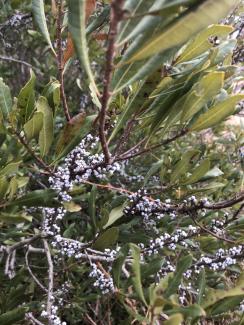
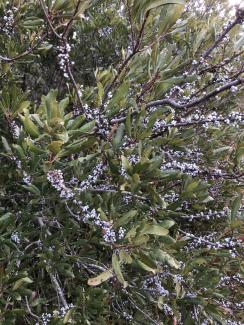
Habitat: marshes, forests, swamps, and fresh to brackish streams
Wildlife value: Provides excellent winter and extreme weather cover. It is a host plant for the Red-Banded Hairstreak butterfly. Flowers provide an excellent source of nectar for honeybees and butterflies. The fruits are eaten by birds, especially yellow-rumped warbler (which are very efficient at digesting the waxy fruits) in the fall and winter.
Notes: Good for privacy or screening when planted close to each other. At least one male plant is needed to facilitate pollination of the female flowers to produce berries. Scented leaves. Great substitute for skip laurels or privet. Glossy foliage can be sheared to a hedge. Usually requires both male and female plants for good berry production. The shrub tends to sucker, sometimes forming sizable colonies in optimum growing conditions.