Non-native plants this species can replace:
- Japanese barberry, Barberry (Berberis thunbergii)
- Autumn olive (Elaeagnus umbellata)
- Winged euonymus, Burning bush (Euonymus alatus)
- Japanese privet, Wax-leaf privet (Ligustrum japonicum)
- Winter honeysuckle (Lonicera fragrantissima)
- Bush honeysuckles, Amur honeysuckle (Lonicera maackii)
- Morrow's honeysuckle (Lonicera morrowii)
- Bush honeysuckles (Lonicera spp.)
- Tartarian honeysuckle (Lonicera tatarica)
- Leatherleaf holly, Leatherleaf mahonia (Mahonia bealei)
- Nandina, Heavenly bamboo (Nandina domestica)
- Linden arrow-wood, Linden viburnum (Viburnum dilatatum)
Common Name
Winterberry
Plant Form
Shrubs & Small Trees
Duration
Perennial
Max Height (ft)
12.0
Growth Rate
Slow
Region
Coastal
Piedmont
Mountain

Hardiness Zone
5,
6,
7,
8,
9
Commercially Available
Nurseries that may carry live plant:
Nurseries that may carry seeds:
My Native Garden
Put together a printable/downloadable list of plants that you have in your garden.
Habitat
Alluvial swamps, seepage swamps, bogs, ponds, and depression swamps; occasionally in well-drained floodplain forests and mesic upland forests. Frequent throughout Virginia
Wildlife value
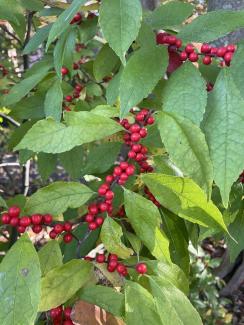
The Winterberry is a host plant for Henry's Elfin butterfly and attracts other pollinators. Its fruits are eaten by over 48 species of birds, including cedar waxwings, and small mammals. Members of the genus Ilex support the following specialized bee: Colletes banksi. The foliage is food source for rabbits and deer
Poisonous to Humans:
Poison Severity:
Low
Poison Symptoms:
Minor toxicity. Ingestion may cause vomiting, diarrhea, or other illness in humans
Causes Contact Dermatitis:
No
Poison Part:
Fruits, Leaves
Flower Color
Gold/Yellow
Flower Prominence
Conspicuous
Bloom Time
Spring
Early Summer
Bloom Month
April
May
June
Fall Color
Gold/Yellow
Light Requirements
Full sun
Partial sun
Shade
Moisture Requirements
Wet
Moist
Average
Dry
Soil Texture
Clay
Loamy
Sandy
Low Maintenance
Yes
Seed or Fruit eaten by wildlife?
Yes
Pollinators
Bees
Butterfiles