
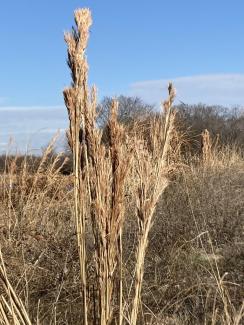
Habitat: fresh marshes, wet soils, coastal areas
Wildlife value: This plant is a larval host for butterflies, including Common Wood-Nymph (Cercyonis pegala) larvae and various Skipper larvae. Adult Common Wood-Nymph butterflies feed on rotting fruit and flower nectar. Provides excellent cover year-round. Seeds are eaten by songbirds and small mammals.
Notes: tolerates drought; grows in tufts; reddish fall color, reddish-brown flower
Fire Risk: This plant has an extreme flammability rating and should not be planted within the defensible space of your home.
High Value Generalist
Earth Sangha lists this plant as a "High Value Generalist" because it is easy to grow, occurs across a wide range of habitats and is known to be of high value to wildlife
My Native Garden
Put together a printable/downloadable list of plants that you have in your garden.