Common Name
Silverrod
White goldenrod
Plant Form
Herbs
Duration
Perennial
Growth Rate
Medium
Region
Coastal
Piedmont
Mountain

Hardiness Zone
5,
6,
7,
8,
9
Commercially Available
Nurseries that may carry live plant:
My Native Garden
Put together a printable/downloadable list of plants that you have in your garden.
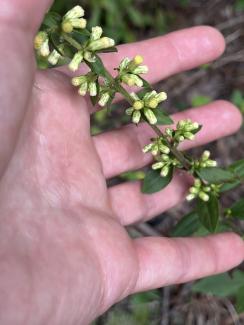
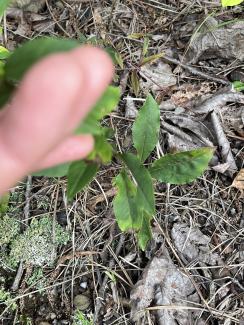
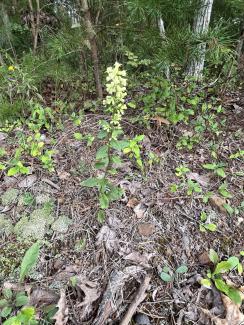
Habitat
Dry-mesic to dry upland forests, rocky woodlands, barrens (especially on shale and sandstone), clearings, and road banks; occurs on a wide range of substrates but most numerous in acidic, nutrient-poor soils. Frequent to common throughout Virginia
Wildlife value
Supports Wavy-lined Emerald (Synchlora aerata) larvae. Bees, butterflies, and beetles, especially flower (soldier) beetles (Chauliognathus) are strongly attracted to the nectar-rich flowers. Members of the genus Solidago supports specialized bees. Dead stems are used by stem-nesting bees. Birds eat seeds
Flower Color
Cream/White
Flower Prominence
Conspicuous
Bloom Time
Late Summer
Fall
Bloom Month
July
August
September
Light Requirements
Full sun
Partial sun
Moisture Requirements
Average
Soil Texture
Clay
Loamy
Sandy
Shallow rocky
Low Maintenance
Yes
Deer Resitant
Yes
Seed or Fruit eaten by wildlife?
Yes
Pollinators
Bees
Butterfiles
Top 30 for Butterfly and Moth Caterpillars?
Yes
Number of Lepidotera Species Genus Supports
104
Top 30 for Pollen Specialist Bees?
Yes
Number of Pollen Specialist Bees that Rely on this Genus
42
Tolerates