
Commercially Available
My Native Garden
Put together a printable/downloadable list of plants that you have in your garden.
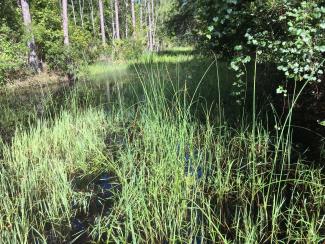
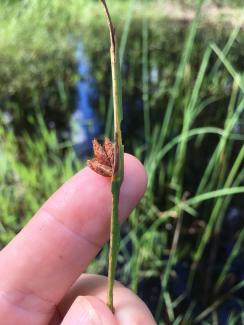
Habitat: Freshwater to oligohaline tidal marshes, high-energy intertidal shores, tidal swamps, interdune swales and ponds, calcareous fens and spring marshes, wet meadows, and rocky or gravelly river shores and bars; also in rare montane (Ridge and Valley) salt marshes developed in seasonally flooded basins over Mississipian-age salt deposits at Saltville, Smyth County. Frequent to locally common in the maritime and estuarine zones of the coastal Plain; infrequent but widely distributed elsewhere in Virginia.
According to Prairie Moon Nursery, this rush is a excellent choice where shoreline stabalization and erosion control. However, it has an aggressive, creeping rhizomatous root system and therefore may not be suitable for small landscape plantings. Plants can withstand emergent situations for a lengthy period. The seeds are readily consumed by ducks, and geese and muskrats will eat the roots. The submerged part of such a wetland plant is host to many invertebrates, which in turn are food for fish, reptiles, amphibians, ducks, etc.