
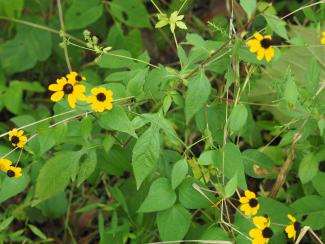
Habitat: Dry woodlands and barrens, clearings, old fields, rich disturbed floodplains, fields, and roadsides; often weedy and usually in at least moderately calcareous soil. Common in the Virginia mountains; frequent in the Piedmont; infrequent in the Coastal Plain.
Wildlife Value: Attracts bees, butterflies, and other pollinators with nectar and pollen in the blooms. This is a larval host plant for Silvery Checkerspot (Chlosyne nycteis) and Wavy-lined Emerald (Synchlora aerata) caterpillars. The adults feed on nectar from red clover, common milkweed, and dogbane. Songbirds, especially American Goldfinches, eat the seeds in the fall.
High Value Generalist
Earth Sangha lists this plant as a "High Value Generalist" because it is easy to grow, occurs across a wide range of habitats and is known to be of high value to wildlife
My Native Garden
Put together a printable/downloadable list of plants that you have in your garden.