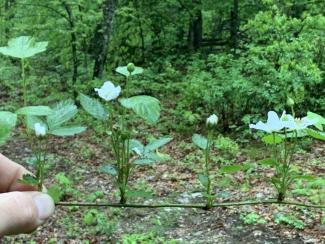
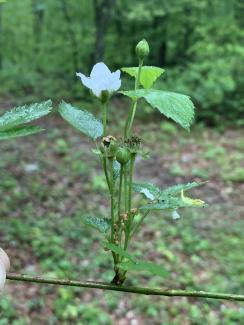
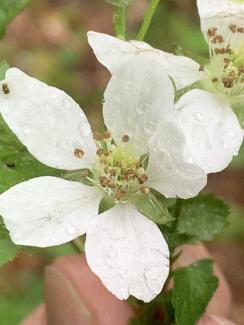
Rubus flagellaris (Native)

Common Name
Common dewberry
Plant Form
Shrubs & Small Trees
Duration
Perennial
Growth Rate
Fast
Region
Coastal
Piedmont
Mountain
Hardiness Zone
5, 6, 7, 8

Photographer: Dwayne Estes
Licensed under: CC BY-NC 4.0
Original photo: Original photo

Photographer: Dwayne Estes
Licensed under: CC BY-NC 4.0
Original photo: Original photo

Photographer: Dwayne Estes
Licensed under: CC BY-NC 4.0
Original photo: Original photo

Habitat

Ubiquitous in varied, wet to dry forests, woodlands, barrens, clearings, old fields, fencerows, and other disturbed habitats. Common throughout Virginia. This is the characteristic, trailing or decumbent-arched "dewberry" occurring over much of Virginia

Wildlife value

This plant also provides food for large mammals, small mammals, and terrestrial birds as well as cover for small mammals and terrestrial birds. The flowers attract both long-tongued and short-tongued bees, who suck nectar or collect pollen. The flowers also attract butterflies and other insects. The fruit is an important source of summer food to many upland gamebirds and songbirds and mammals, while rabbit and deer browse on the leaves and stems. Dead stems are used by stem-nesting bees

High Value Generalist
Earth Sangha lists this plant as a "High Value Generalist" because it is easy to grow, occurs across a wide range of habitats and is known to be of high value to wildlife

Additional Notes

Spines/Thorns

Flower Color
Cream/White
Flower Prominence
Conspicuous
Bloom Time
Spring
Bloom Month
April
May
Light Requirements
Full sun
Partial sun
Shade
Moisture Requirements
Moist
Average
Soil Texture
Clay
Loamy
Sandy
Low Maintenance
Yes
Seed or Fruit eaten by wildlife?
Yes
Pollinators
Bees
Butterfiles
Tolerates
Commercially available
Yes
Nurseries that may carry live plant
Carries Seeds (may not be available)

My Native Garden

Put together a printable/downloadable list of plants that you have in your garden.