Common Name
Swamp azalea
Clammy azalea
Plant Form
Shrubs & Small Trees
Duration
Perennial
Max Height (ft)
8.0
Width (ft)
3.0 -
8.0
Region
Coastal
Piedmont
Mountain

Hardiness Zone
5,
6,
7,
8,
9
Rabbit resistant
Yes
Commercially Available
Nurseries that may carry live plant:
My Native Garden
Put together a printable/downloadable list of plants that you have in your garden.
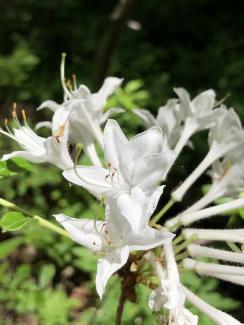
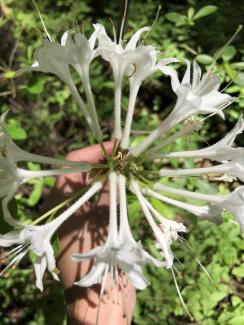
Habitat
Acidic seepage swamps, nonriverine swamps, tidal swamps, acidic alluvial swamps, bogs, fens, depression ponds, pocosins, and wet flatwoods. Frequent in the Virginia Coastal Plain; infrequent in the mountains; rare in the Piedmont
Wildlife value
It proves winter and extreme weather coverage. Hummingbirds, butterflies, and bees are attracted to its blooms for nectar. Members of the genus Rhododendron support the following specialized bee: Andrena (Andrena) cornelli.
Poisonous to Humans:
Poison Severity:
Low
Poison Symptoms:
While the plants are known to contain toxins, ingestion of moderate amounts of azalea (nectar or leaves) poses little toxic hazard
Causes Contact Dermatitis:
No
Poison Part:
Bark, Flowers, Fruits, Leaves, Roots, Seeds, Stems
Also a Problem For:
Dogs and Horses
Flower Color
Cream/White
Flower Prominence
Conspicuous
Fragrant
Yes
Bloom Time
Spring
Early Summer
Late Summer
Bloom Month
May
June
July
Evergreen
Yes
Fall Color
Green
Light Requirements
Full sun
Partial sun
Moisture Requirements
Wet
Moist
Soil Texture
High organic matter
Low Maintenance
Yes
Pollinators
Bees
Butterfiles