Non-native plants this species can replace:
- English ivy, Common ivy (Hedera helix)
Common Name
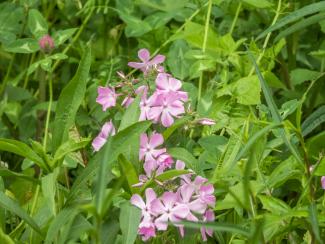
Downy phlox
Plant Form
Herbs
Duration
Perennial
Max Height (ft)
2.0
Width (ft)
1.0 -
1.5
Growth Rate
Medium
Region
Coastal
Piedmont
Mountain

Hardiness Zone
5,
6,
7,
8,
9
Commercially Available
Nurseries that may carry live plant:
My Native Garden
Put together a printable/downloadable list of plants that you have in your garden.
Habitat
Dry to less often mesic open forests, clearings, and road banks; often in rocky or clay hardpan soils. Rare in Virginia mountains, Piedmont, and inner Coastal Plain
Wildlife value
Its flowers attract bees, butterflies, and Cloudwing skippers. Bees include bumblebees, Anthophorine bees, little carpenter bees (Ceratina spp.), cuckoo bees (Nomada spp.), and green metallic bees (Agapostemon spp.) Butterflies include American Painted Lady, Sulfur, and Swallowtail butterflies, Rabbits, deer, and groundhogs will eat the foliage
Flower Color
Cream/White
Pink
Purple/lavender
Flower Prominence
Conspicuous
Bloom Time
Spring
Early Summer
Bloom Month
May
June
July
Light Requirements
Full sun
Partial sun
Moisture Requirements
Moist
Average
Soil Texture
Clay
Sandy
Shallow rocky
Pollinators
Bees
Butterfiles
Hummingbirds