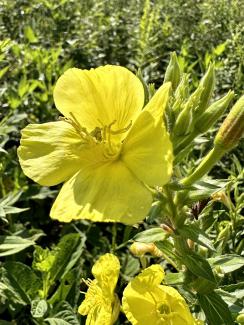
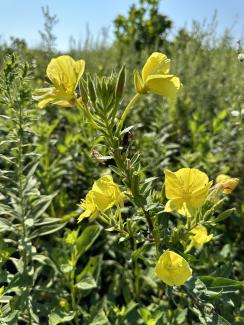
Oenothera biennis (Native)

Common Name
Common evening-primrose
Plant Form
Herbs
Duration
Biennial
Max Height (ft)
5.0
Region
Coastal
Piedmont
Mountain
Hardiness Zone
5, 6, 7, 8, 9
Rabbit resistant
Yes

Photographer: wag4ag
Licensed under: CC BY-NC 4.0
Original photo: Original photo

Photographer: wag4ag
Licensed under: CC BY-NC 4.0
Original photo: Original photo

Additional Info

Habitat: The members of this complex are common inhabitants of fields, pastures, roadsides, clearings, and other open, disturbed habitats throughout the state.

Wildlife value: Flowers open in the evening and close in the morning. They are fertilized by night-flying moths which are attracted by the mild lemon flower fragrance and by bees in the early morning before closure. Larvae of the Primrose moth feed on the flower buds.  Seeds attracts birds. Members of the genus Oenothera support the specialized bees.

Notes: This fragrant flower produces a profusion of yellow flowers that open in the evening and close in the morning. This species blooms in its second year. This plant is included in the Homegrown National Park: Container Gardening with Keystones list.

High Value Generalist
Earth Sangha lists this plant as a "High Value Generalist" because it is easy to grow, occurs across a wide range of habitats and is known to be of high value to wildlife

Flower Color
Gold/Yellow
Flower Prominence
Conspicuous
Fragrant
Yes
Bloom Time
Spring
Early Summer
Late Summer
Fall
Light Requirements
Full sun
Partial sun
Moisture Requirements
Moist
Dry
Average
Pollinators
Bees
Butterfiles
Number of Lepidotera Species Genus Supports
16
Top 30 for Pollen Specialist Bees?
Yes
Number of Pollen Specialist Bees that Rely on this Genus
7
Commercially available
Yes

My Native Garden

Put together a printable/downloadable list of plants that you have in your garden.