
Commercially Available
My Native Garden
Put together a printable/downloadable list of plants that you have in your garden.
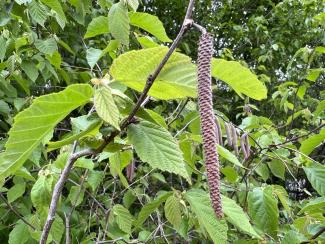
Suckering, native deciduous shrub that may grow 9 to 12 feet tall. It can be found naturally in rocky woodlands, forests, hillsides, pastures, and thickets. Frequent to common in the mountains, piedmont, and inner coastal Plain; rare in the outer coastal plain.
Wildlife value: The nuts are eaten by songbirds, ruffed grouse, quail, wild turkeys, chipmunks, black bears, foxes, white-tailed deer, skunks, and squirrels. The twigs and leaves are browsed by white-tailed deer. It is also the host plant for caterpillars of the Saturniidae moth. Wind pollinated, they don't produce any nectar. However, bees will sometimes gather the abundant pollen from the male flowers
Edibility: Its nuts are edible.