- Lesser celandine, Fig buttercup (Ficaria verna)
- Yellow flag (Iris pseudacorus)
- Creeping jenny, Moneywort (Lysimachia nummularia)

Commercially Available
My Native Garden
Put together a printable/downloadable list of plants that you have in your garden.
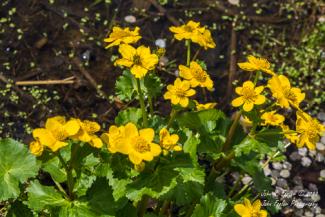
Freshwater to oligohaline tidal marshes, high-energy intertidal shores, tidal swamps, interdune swales and ponds, calcareous fens and spring marshes, wet meadows, and rocky or gravelly river shores and bars. Frequent to locally common in the maritime and estuarine zones of the Coastal Plain; infrequent but widely distributed elsewhere in Virginia
Attracts hummingbirds and bees
The common name, Marsh marigold, is misleading because it does not look like, nor is it related to, marigolds
This plant can be toxic and ingesting large amounts of the plant's leaves can lead to burning of the throat, vomiting, bloody diarrhea, dizziness, fainting, and convulsions. No part of this plant should ever be eaten raw