Common Name
Bird's foot violet
Bird's-foot violet
Birdfoot violet
Plant Form
Herbs
Duration
Perennial
Max Height (ft)
0.7
Width (ft)
0.3 -
0.7
Growth Rate
Medium
Region
Coastal
Piedmont
Mountain

Hardiness Zone
5,
6,
7,
8
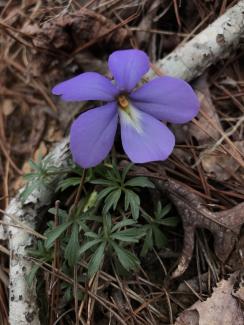
Habitat
Dry rocky or sandy forests, woodlands, barrens, clearings, and road banks. Frequent to common in the Virginia mountains, Piedmont, and inner Coastal Plain; rare in the outer Coastal Plain
Wildlife value
This plant supports Fritillary butterfly larvae. Host plant for fritillary butterflies. Members of the genus Viola supports specialized bees. Butterflies and moths use this plant as a larval host. Birds and small mammals use the seed fruits as a food source
High Value Generalist
Earth Sangha lists this plant as a "High Value Generalist" because it is easy to grow, occurs across a wide range of habitats and is known to be of high value to wildlife
Flower Color
Blue
Cream/White
Purple/lavender
Flower Prominence
Conspicuous
Bloom Time
Spring
Early Summer
Bloom Month
March
April
May
June
Light Requirements
Full sun
Partial sun
Moisture Requirements
Moist
Average
Soil Texture
Sandy
Shallow rocky
Deer Resitant
Yes
Pollinators
Bees
Butterfiles
Commercially available
Yes
Nurseries that may carry live plant
My Native Garden
Put together a printable/downloadable list of plants that you have in your garden.