Common Name
American lotus
American lotus-lily
Yellow lotus
Plant Form
Herbs
Duration
Perennial
Max Height (ft)
6.0
Width (ft)
1.0
Growth Rate
Fast
Region
Coastal
Piedmont
Mountain

Hardiness Zone
5,
6,
7,
8,
9
Commercially Available
Nurseries that may carry live plant:
My Native Garden
Put together a printable/downloadable list of plants that you have in your garden.
Habitat
Ponds, lakes, slow-moving streams, and freshwater tidal marshes. Infrequent and local in the Virginia Coastal Plain, Piedmont, and northern mountains
Wildlife value
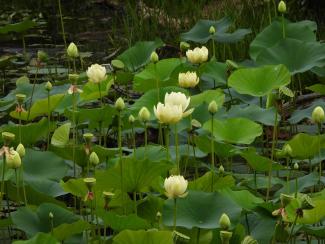
The lotus plants provide a healthy habitat for a wide range of micro and macro organisms. Waterfowl such as mallards, wood ducks consume the acorn-like seeds. The large, umbrella-like leaves shade shallow water and provide crucial structural habitat. They shield small aquatic animals, including immature fish and frog and toad tadpoles, from heat, harsh sun, and predators like wading birds and large fish. Rhizomes are eaten by beavers and muskrats
Flower Color
Cream/White
Gold/Yellow
Flower Prominence
Conspicuous
Bloom Time
Early Summer
Late Summer
Fall
Bloom Month
June
July
August
September
Light Requirements
Full sun
Moisture Requirements
In Water
Wet
Moist
Soil Texture
Clay
High organic matter
Loamy
Sandy
Pollinators
Bees
Tolerates