Non-native plants this species can replace:
- Siberian crabapple (Malus baccata)
- Japanese crabapple (Malus floribunda)
- Chinese crabapple (Malus hupehensis)
- Callery pear, Bradford pear (Pyrus calleryana)
Common Name
Southern crabapple
Plant Form
Medium Trees
Shrubs & Small Trees
Duration
Perennial
Max Height (ft)
30.0
Width (ft)
20.0 -
30.0
Region
Coastal
Piedmont
Mountain

Hardiness Zone
5,
6,
7,
8
Commercially Available
Nurseries that may carry live plant:
My Native Garden
Put together a printable/downloadable list of plants that you have in your garden.
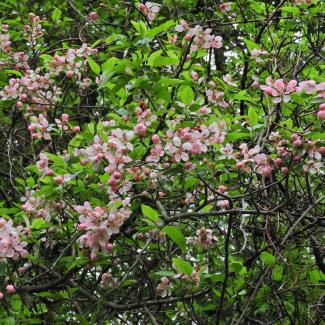
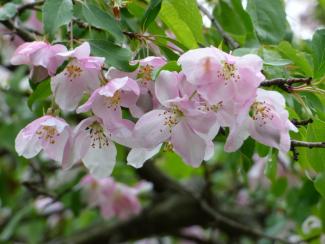
Additional Info
Habitat: Open upland forests, woodlands, shrubby clearings, old fields, and fencerows; occasionally in alluvial or seasonally wet habitats. Infrequent but widespread in the southern and central Coastal Plain; infrequent to rare elsewhere in Virginia
Wildlife Value: Nectar from flowers attracts native bees and honey bees. Fruits are a food source for birds as well as raccoons, rabbits, opossum, squirrel, and foxes. Branches provide cover and nesting sites for birds and small mammals
Problems:
Frequent Disease Problems
Frequent Insect Problems
Thorns
Flower Color
Pink
Flower Prominence
Conspicuous
Fragrant
Yes
Bloom Time
Spring
Light Requirements
Full sun
Partial sun
Moisture Requirements
Moist
Average
Soil Texture
Clay
Loamy
Sandy
Seed or Fruit eaten by wildlife?
Yes
Pollinators
Bees
Butterfiles
Top 30 for Butterfly and Moth Caterpillars?
Yes
Number of Lepidotera Species Genus Supports
237