Non-native plants this species can replace:
- Five-leaved akebia, Chocolate vine (Akebia quinata)
- Porcelain-berry, Porcelainberry (Ampelopsis glandulosa)
- Oriental bittersweet, Asiatic bittersweet (Celastrus orbiculatus)
- Sweet autumn clematis (Clematis terniflora)
- Winter creeper, Wintercreeper (Euonymus fortunei)
- English ivy, Common ivy (Hedera helix)
- Winter honeysuckle (Lonicera fragrantissima)
- Hall's honeysuckle, Gold-and-silver honeysuckle (Lonicera japonica)
- Japanese wisteria (Wisteria floribunda)
- Chinese wisteria (Wisteria sinensis)
Common Name
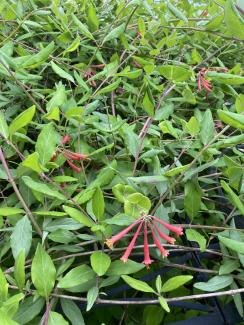
Trumpet honeysuckle
Coral honeysuckle
Plant Form
Vines
Duration
Perennial
Max Height (ft)
20.0
Width (ft)
3.0 -
6.0
Growth Rate
Fast
Region
Coastal
Piedmont
Mountain

Hardiness Zone
5,
6,
7,
8,
9
Commercially Available
My Native Garden
Put together a printable/downloadable list of plants that you have in your garden.
Habitat
Mesic to dry upland forests and woodlands, floodplain forests, wet flatwoods; maritime forests, woodlands, and dune scrub; also in clearings, fencerows, and other disturbed habitats. Frequent in the Virginia Coastal Plain and Piedmont; infrequent in the mountains
Wildlife value
Its flowers are attractive to hummingbirds, bees, butterflies and some moth pollinators. The small red berries are eaten by songbirds. The foliage may be eaten by white-tailed deer. It is a larval host for the Spring Azure Butterfly and the Snowberry Clearwing Moth
Additional Notes
Highly flammable
Flower Color
Red/burgandy
Gold/Yellow
Orange
Flower Prominence
Conspicuous
Bloom Time
Spring
Early Summer
Late Summer
Bloom Month
March
April
May
June
July
Light Requirements
Full sun
Partial sun
Moisture Requirements
Average
Moist
Soil Texture
Clay
High organic matter
Loamy
Low Maintenance
Yes
Deer Resitant
Yes
Seed or Fruit eaten by wildlife?
Yes
Pollinators
Bees
Butterfiles
Hummingbirds