Common Name
Narrow-leaf tick trefoil
Panicled tick trefoil
Velcro vine
Plant Form
Herbs
Duration
Perennial
Max Height (ft)
4.0
Region
Coastal
Piedmont
Mountain

Hardiness Zone
5,
6,
7,
8,
9
Commercially Available
Nurseries that may carry live plant:
My Native Garden
Put together a printable/downloadable list of plants that you have in your garden.
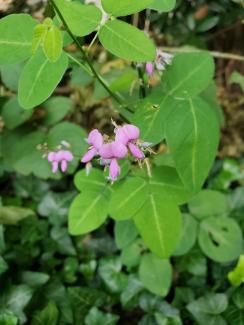
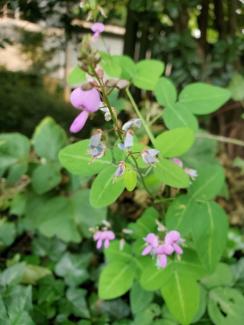
Additional Info
Habitat: Dry to mesic open forests, woodlands, clearings, old fields, and roadsides. Common throughout Virginia
Wildlife Value: The genus Desmodium is a larval host plant for many species of butterfly, including the Silver-Spotted Skipper (Epargyreus clarus), Hoary Edge (Achalarus lyciades), Northern Cloudywing (Thorybes pylades), Southern Cloudywing (Thorybes bathyllus), Gray Hairstreak (Strymon melinus) and Eastern Tailed-Blue (Everes comyntas). In the winter, its seeds serve as a food source for songbirds, quail, and small mammals.
Flower Color
Cream/White
Purple/lavender
Flower Prominence
Conspicuous
Bloom Time
Spring
Early Summer
Late Summer
Fall
Light Requirements
Full sun
Partial sun
Shade
Moisture Requirements
Moist
Soil Texture
Clay
Loamy
Seed or Fruit eaten by wildlife?
Yes
Pollinators
Butterfiles