Caltha palustris var. palustris (Native)

Non-native plants this species can replace:
Synonym(s)
Caltha palustris
Common Name
Cowslip
Marsh marigold
Plant Form
Herbs
Duration
Perennial
Max Height (ft)
2.0
Width (ft)
1.0 - 1.5
Region
Coastal
Piedmont
Mountain
Hardiness Zone
5, 6, 7

Commercially Available


Nurseries that may carry live plant:
Nurseries that may carry seeds:

My Native Garden

Put together a printable/downloadable list of plants that you have in your garden.
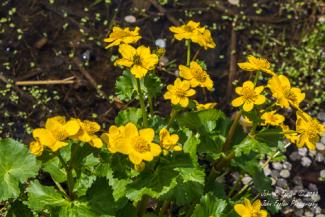
Photographer: John Eppler
Licensed under: CC BY-NC 4.0
Original photo: Original photo

Habitat

Freshwater to oligohaline tidal marshes, high-energy intertidal shores, tidal swamps, interdune swales and ponds, calcareous fens and spring marshes, wet meadows, and rocky or gravelly river shores and bars. Frequent to locally common in the maritime and estuarine zones of the Coastal Plain; infrequent but widely distributed elsewhere in Virginia

Wildlife value

Attracts hummingbirds and bees

Gardening tips

The common name, Marsh marigold, is misleading because it does not look like, nor is it related to, marigolds

Pruning Guidance
Pruning Time
Summer post-bloom cleanup
Pruning Method
Minimal pruning
Wildlife Benefits
Leaf litter supports overwintering insects
Pruning Notes
Goes dormant by early to midsummer. Let the foliage yellow and collapse naturally because it feeds next year's growth. Leave it in place, keep fallen leaves over the planting for overwintering insects, and mark the spot to avoid digging into it while dormant. Wetland spring bloomer whose foliage declines in summer.
Poisonous to Humans:
Poison Severity:
Low
Poison Symptoms:

This plant can be toxic and ingesting large amounts of the plant's leaves can lead to burning of the throat, vomiting, bloody diarrhea, dizziness, fainting, and convulsions. No part of this plant should ever be eaten raw

Causes Contact Dermatitis:
No
Poison Part:
Leaves
Flower Color
Gold/Yellow
Flower Prominence
Conspicuous
Bloom Time
Spring
Bloom Month
April
May
June
Light Requirements
Full sun
Partial sun
Moisture Requirements
Wet
Moist
Soil Texture
Clay
Loamy
Sandy
Low Maintenance
Yes
Deer Resitant
Yes
Pollinators
Bees
Hummingbirds
Tolerates