
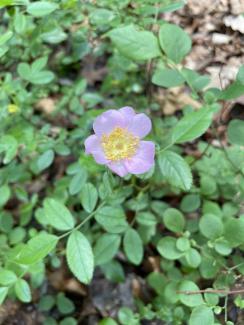
ry-mesic to dry (rarely mesic) upland forests, woodlands, barrens, clearings, old fields, pastures, and roadsides. Common throughout Virginia
It provides excellent cover year round. Hips are eaten by songbirds, quail, wild turkey and small mammals. Bumblebees, diggerbees, green metialic bees, Anthophorine bees (Anthopora spp.) syrphid flies, and beetles visit the flowers in search of pollen. Moth larva feed on the leaves. Leaves and stems are browsed by white-tailed deer
High Value Generalist
Earth Sangha lists this plant as a "High Value Generalist" because it is easy to grow, occurs across a wide range of habitats and is known to be of high value to wildlife
Native bees nest in the dead, hollow stems, so gardeners are encouraged to cut back dead stems to 12 to 24 inches and allow them to remain standing until they disintegrate on their own.
Prickles
My Native Garden
Put together a printable/downloadable list of plants that you have in your garden.