Non-native plants this species can replace:
- Periwinkle (Vinca minor)
Synonym(s)
Aster divaricatus
Aster divaricatus var. divaricatus
Common Name
White wood aster
Plant Form
Herbs
Max Height (ft)
3.0
Width (ft)
1.5 -
2.5
Growth Rate
Fast
Region
Coastal
Piedmont
Mountain

Hardiness Zone
5,
6,
7,
8
Commercially Available
Nurseries that may carry live plant:
Nurseries that may carry seeds:
My Native Garden
Put together a printable/downloadable list of plants that you have in your garden.
Additional Info
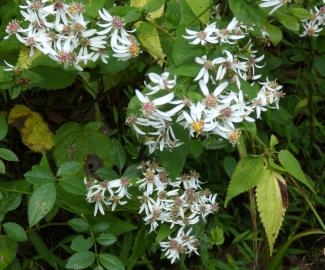
Habitat: Typically grows in dry open woodlands, primarily in Appalachian mountain areas.
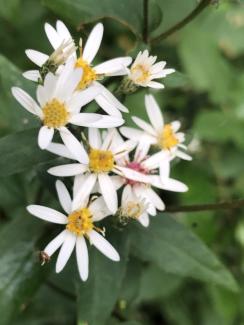
Wildlife Value: Birds and small mammals eat seeds. Host plant for the Pearl Crescent butterfly. Flowers are attractive to bees and butterflies.
Flower Color
Cream/White
Flower Prominence
Conspicuous
Bloom Time
Late Summer
Fall
Bloom Month
August
September
October
Light Requirements
Partial sun
Shade
Moisture Requirements
Moist
Average
Dry
Soil Texture
Clay
Loamy
Shallow rocky
Seed or Fruit eaten by wildlife?
Yes
Pollinators
Bees
Butterfiles