
Commercially Available
My Native Garden
Put together a printable/downloadable list of plants that you have in your garden.
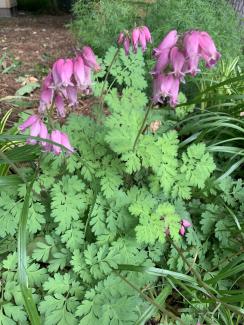
Habitat: Exposed to partly shaded cliffs, ledges, pavements, and talus of sandstone, quartzite, shale, granite, and other acidic rocks. Frequent in the Virginia mountains south from Augusta and Highland counties; rare in the Piedmont
Wildlife Value: Attracts bees, butterflies, and hummingbirds
Exposed to partly shaded cliffs, ledges, pavements, and talus of sandstone, quartzite, shale, granite, and other acidic rocks. Frequent in the Virginia mountains south from Augusta and Highland counties; rare in the Piedmont
Attracts bees, butterflies, and hummingbirds
Trembling, staggering, vomiting, diarrhea, convulsions, labored breathing if eaten in large quantities. Skin irritation after repeated contact with the cell sap is mild and short-lasting