
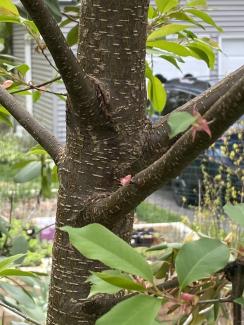
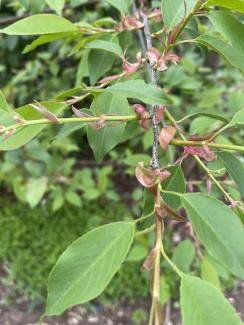
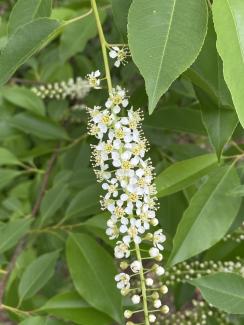
Seedlings, saplings, and small trees are very common in a wide range of wet to dry forests and woodlands throughout; canopy trees are most abundant (often dominant or co-dominant) in fencerows and old field successional forests, maritime dune scrub, maritime woodlands and forests, and northern hardwood forests. Common throughout.
This plant provides nectar for pollinators and is a larval host plant for several species of butterflies. Fruits are eaten by songbirds, wild turkeys, quail, white-tailed deer and small mammals. Cedar Waxwings can digest the fruits without releasing the cyanide, but humans are advised not to consume the fruits.
High Value Generalist
Earth Sangha lists this plant as a "High Value Generalist" because it is easy to grow, occurs across a wide range of habitats and is known to be of high value to wildlife
Messy
If ingested, it is likely to cause death in livestock and pets. Gasping, weakness, excitement, pupil dilation, spasms, convulsions, coma, respiratory failure.
My Native Garden
Put together a printable/downloadable list of plants that you have in your garden.